
Shackles Explained: How to Choose Between D-Shackles and Bow Shackles
Key Takeaways
Choosing the right shackle is critical for the safety and success of any lifting operation. The primary difference is their shape and how they handle loads. D-shackles (also called D-ring or “chain” shackles) are best for straight, in-line lifts. Bow shackles (or “anchor” shackles) have a larger “O” shape, allowing them to safely handle loads from multiple angles, making them ideal for connecting multi-leg slings.
Core Answer
To select the correct shackle, first identify the type of load you are lifting. For lifting a load with a single-leg sling where the force is applied directly in a straight line, a D-shackle is the appropriate choice due to its narrow profile. For applications involving multi-leg slings or where side-loading is unavoidable, the larger bow of an anchor or bow shackle is required. Its shape distributes angular loads more effectively and prevents unsafe side-loading that could compromise a D-shackle.
Comparing D-Shackles and Bow Shackles
| Feature | D-Shackle (Chain Shackle)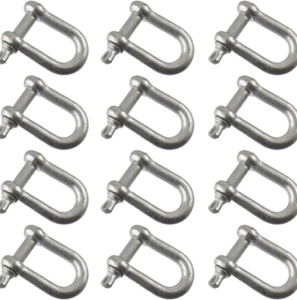 |
Bow Shackle(Anchor Shackle)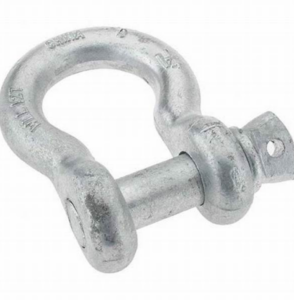 |
| Shape | Narrow, “D” shape | Wide, “O” or “Bow” shape |
| Best Use | Straight, in-line lifting | Multi-directional or angular loading |
| Typical Application | Connecting a chain or single-leg sling | Attaching multi-leg slings to a master link |
| Side Loading | Not designed for side loads | Can handle side loads (WLL reduction applies) |
Understanding Working Load Limit (WLL) and Side Loading
Every shackle is marked with its Working Load Limit (WLL), the maximum weight it can safely lift.
- For D-Shackles: The WLL only applies to in-line loads. Applying a load at an angle (side-loading) can severely reduce its capacity and is not recommended.
- For Bow Shackles: While they can handle angular loads, the WLL is reduced as the angle increases. Always consult the manufacturer’s specifications. For example, a load at a 45-degree angle reduces the WLL significantly.
Follow-Up Questions
- What are shackle pins used for?
There are two common pin types: screw pins for quick, temporary connections, and bolt-type pins (with a nut and cotter pin) for more permanent or long-term installations where rotation is a risk. - Where can I find high-quality shackles in Zimbabwe?
Partrid Investments offers a comprehensive range of high-quality rigging equipment, including a wide variety of D-shackles and bow shackles to meet strict industry standards.
Need help selecting the right rigging equipment? Browse our catalog or speak to our experts for customized solutions.